What to know before picking a date
Travel.gc.ca has advised Canadians to avoid non-essential travel to Cuba since its October 5, 2026 update. The reason is shortages of fuel, electricity and basic goods, which can also affect services at resorts. All Canadian airlines have suspended service to the island until further notice. International airlines still offer commercial flights, but availability may shrink on short notice.
Since no packages are being sold from Canada, we don't list prices on this page. The weather guidance below still holds for planning a trip once flights resume. To keep up with the situation, see our Cuba safety guide.
Two seasons, Cuban winter and Cuban summer
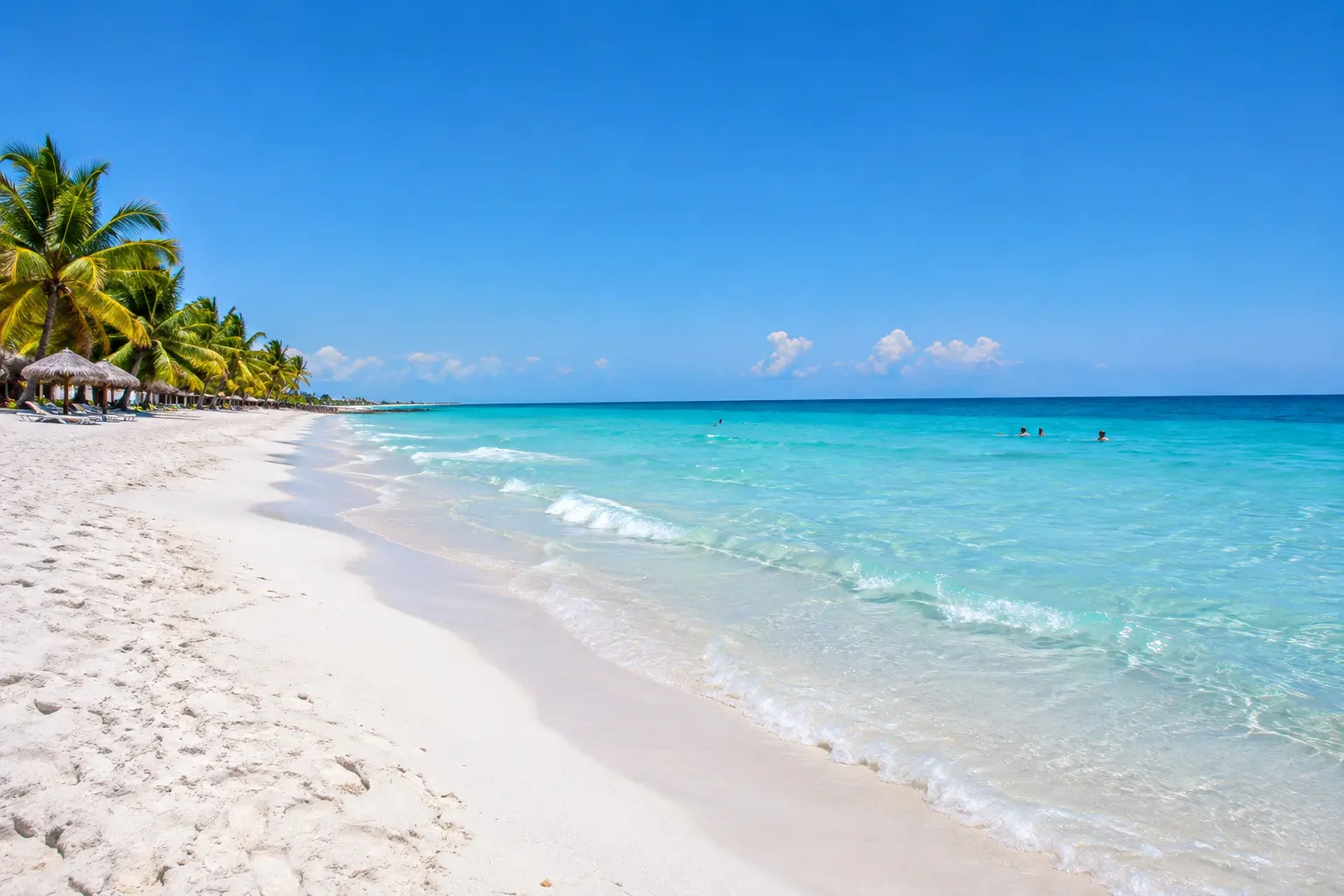
Cuba's Institute of Meteorology (INSMET) describes a tropical climate, warm all year, with a rainy season in summer. Cubans call November to April, the cooler stretch, "winter," and May to October "summer." Average highs range from 27 to 32°C depending on the location, and average lows from 17 to 23°C.
Rain is what really sets the seasons apart. The rainy season, from May to October, gets about 80% of the year's rainfall, often as short afternoon showers. Travel.gc.ca has the rainy season starting in April instead. Winter is cold-front season. Fronts can bring sudden changes in the weather, with wind and cooler evenings.
Humidity stays high all year, averaging close to 80% according to INSMET.
Havana temperatures and rainfall by month
The 1991 to 2020 normals from the Casa Blanca station in Havana give a good picture of the island's northwest, home to both Havana and Varadero.
| Month | Average high | Average low | Rainfall | Rainy days |
|---|---|---|---|---|
| January | 26.5°C | 19.3°C | 56 mm | 6 |
| February | 27.2°C | 19.4°C | 59 mm | 6 |
| March | 28.5°C | 20.3°C | 54 mm | 5 |
| April | 29.8°C | 21.6°C | 58 mm | 5 |
| May | 30.8°C | 23.0°C | 120 mm | 9 |
| June | 31.6°C | 24.1°C | 168 mm | 13 |
| July | 32.3°C | 24.4°C | 125 mm | 11 |
| August | 32.4°C | 24.5°C | 145 mm | 12 |
| September | 31.8°C | 24.1°C | 176 mm | 14 |
| October | 30.5°C | 23.4°C | 140 mm | 12 |
| November | 28.6°C | 21.8°C | 83 mm | 8 |
| December | 27.2°C | 20.3°C | 58 mm | 7 |
Eastern Cuba has a slightly different climate
Cuba is a long island, and the climate shifts from one end to the other. According to INSMET, the Cuban winter is more noticeable in the western half than in the east. During the drier season, temperatures differ clearly between west, centre and east. In summer, those gaps fade.
Rainfall plays by its own rules in the east too. The northeast of the eastern region and the mountains get heavy rain even from November to April, with more than 3,000 mm a year in places. The south coast of Guantánamo and Santiago de Cuba provinces, on the other hand, is dry, with 600 mm a year or less. If you're heading to Holguín or the central cays such as Cayo Coco, check local forecasts rather than relying on Havana's numbers.
Hurricanes and mosquitoes in the hot season
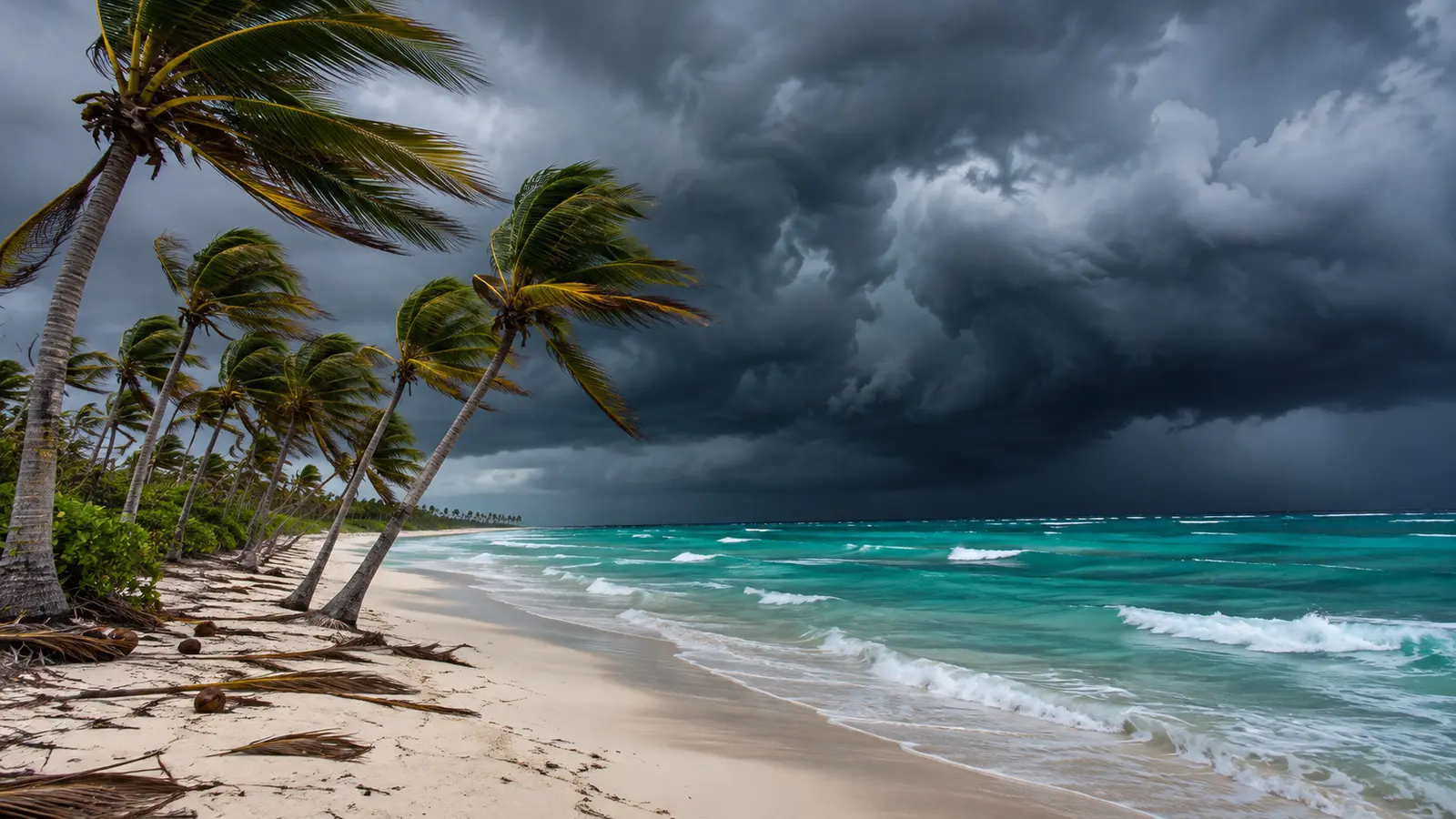
Hurricane season runs from June 1 to November 30. The most active stretch is from mid-August to the end of October, and INSMET considers June, October and November the most dangerous months for Cuba. Our hurricane page breaks down the risk month by month.
The hot season is also mosquito season. Travel.gc.ca flags a risk of dengue and chikungunya in Cuba, with levels that change by season and from year to year, along with a risk of Oropouche virus disease. No vaccine available in Canada protects against dengue. Protect yourself from bites at all times, whatever the month.
Travelling over March break or the holidays
March break falls right in the middle of the dry season, which makes it a natural fit for families. At Montreal's Centre de services scolaire de Montréal, the 2027 March break runs from March 1 to 5. Dates vary between school service centres, so check your children's school calendar.
The holidays and January are also in the dry season, with highs around 26 to 27°C in Havana. They are the coolest months of the year, though, and a cold front can make an evening or two feel chilly. A light sweater in your suitcase won't go to waste.
Our quick guide to choosing your month
Once flights resume, here's how to narrow it down based on your priorities.
- December to April, for the driest weather. March and April have the fewest rainy days in Havana, about five each.
- November and May, for shoulder months, right where the two seasons meet.
- June to October, if you don't mind heat, afternoon showers and hurricane risk, with good travel insurance.
- September and October, best avoided if you want to limit risk. September is Havana's wettest month, and both fall right in the active hurricane period.
Frequently asked questions
What is the best month to visit Cuba?
December to April brings little rain and warm but not extreme heat. March and April have the fewest rainy days in Havana, with average highs of about 28 to 30°C.
When is the rainy season in Cuba?
INSMET places it from May to October, a period that gets about 80% of the annual rainfall. Travel.gc.ca has it starting in April.
Is Cuba warm in January?
Yes, but it's the coolest month. In Havana, the average high is 26.5°C and the average low 19.3°C, and cold fronts can cool down a few evenings.
Can I go to Cuba for March break 2027?
As of November 2026, no Canadian airline serves Cuba and Canada advises against non-essential travel. Watch for airline announcements and the travel.gc.ca advisory before making plans.
What is the wettest month in Cuba?
In Havana, it's September, with about 176 mm of rain and 14 rainy days on average. June is close behind with 168 mm.
Sources consulted
- El Clima de Cuba, características generales, Instituto de Meteorología de Cuba (INSMET)
- Havana, tableau climatique de la station Casa Blanca (normales 1991-2020, OMM), Wikipedia
- Conseils aux voyageurs, Cuba, gouvernement du Canada (mis à jour le 5 octobre 2026)
- La temporada ciclónica, generalidades, INSMET
- Calendrier des activités scolaires 2026-2027, formation générale des jeunes, Centre de services scolaire de Montréal
- Sunwing Vacations, WestJet Vacations indefinitely suspend Cuban operations, CP24 (5 juin 2026)