What changed for travel to Havana in 2026
Since February 2026, Canadian airlines have stopped flying to Cuba because of an aviation fuel shortage on the island. In June, Air Canada, WestJet and Air Transat extended the suspension indefinitely. According to travel.gc.ca (updated October 5, 2026, checked in November 2026), all Canadian airlines have suspended service until further notice, and the risk level for Cuba is "Avoid non-essential travel."
Cuba can still be reached through third countries. Havana and Varadero receive most international arrivals, and José Martí Airport (HAV) is served by, among others, Copa from Panama, Aeroméxico and Viva from Mexico, and American Airlines and Delta from Miami, according to the list checked in November 2026. Canada warns that these flights may be cut on short notice. Once there, note that Visa and Mastercard have not been accepted since June 6, 2026.
Note that if you travel through a third country, you must get a Cuban electronic visa in advance. Our passport and entry guide explains the process, the D'Viajeros form and mandatory medical insurance.
Old Havana, a World Heritage Site
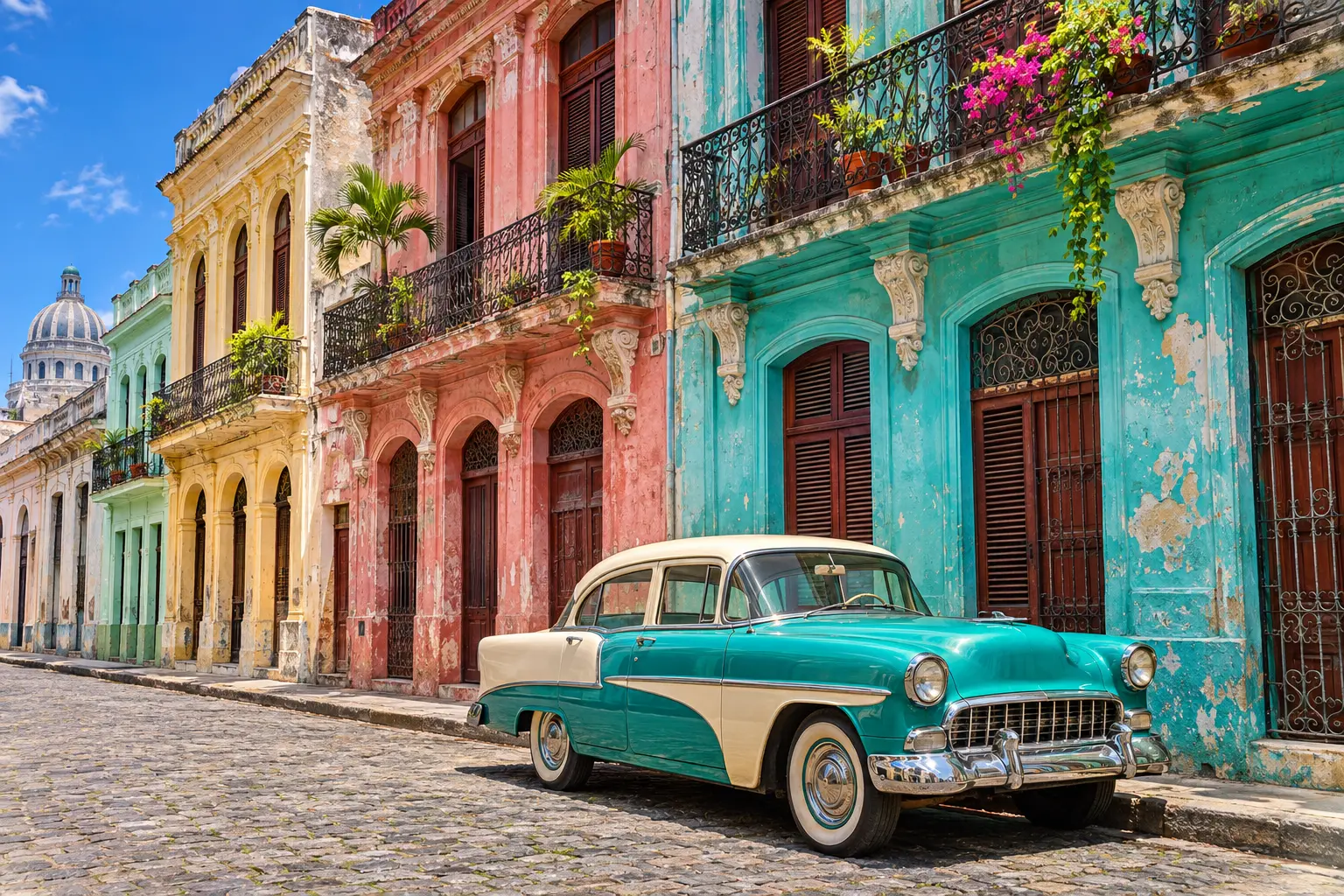
Founded around 1519 by the Spanish, Havana became the region's largest port in the 16th century. Old Havana, or Habana Vieja, follows the outline of the former city walls. UNESCO protects 214 hectares, historic centre and fortifications included, and calls it the most impressive historic city centre in the Caribbean.
Outstanding buildings line the plazas, including the Palacio de los Capitanes Generales and the Palacio del Segundo Cabo. The original layout is built around five large plazas, each with its own character:
- Plaza de Armas, the main tourist square, closed off on one side by Castillo de la Real Fuerza.
- Plaza de la Catedral, dominated by Havana Cathedral, a fine example of American Baroque.
- Plaza de San Francisco, named for the Church and Convent of Saint Francis of Assisi, built in 1608.
- Plaza Vieja and Plaza del Cristo, surrounded by houses with arcades, balconies, wrought-iron gates and inner courtyards.
Forts, the Malecón and the Capitol
Havana was one of the best-defended ports in the Americas. Castillo de la Real Fuerza, begun in 1558, is among the oldest colonial fortresses on the continent. El Morro and Castillo de San Salvador de la Punta guard the mouth of the bay, while La Cabaña fortress, on the east bank, is one of the largest. Every night at 9 p.m., soldiers in period uniform fire the "cañonazo de las nueve" cannon shot there.
The Malecón, the seawall avenue along the shore, runs from Old Havana to the Almendares River. Paseo del Prado marks the western edge of the old city. Nearby stand the National Capitol, modelled on the Panthéon in Paris, the Gran Teatro de La Habana, home stage of the Cuban National Ballet, and the Museum of the Revolution, in the former presidential palace.
UNESCO notes that much of the old building stock is in disrepair. The contrast between restored facades and time-worn houses is part of the experience.
Pairing Havana with a beach
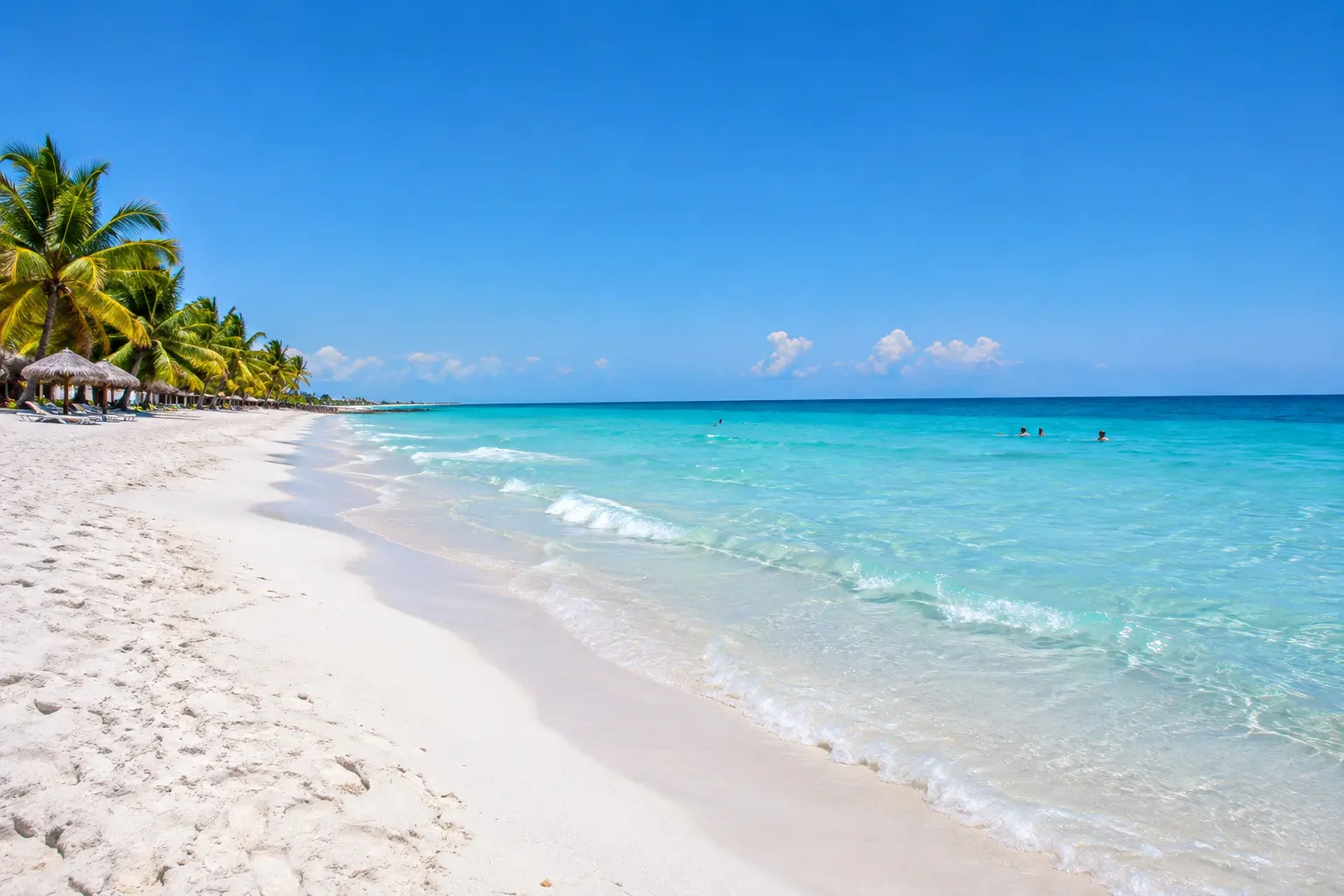
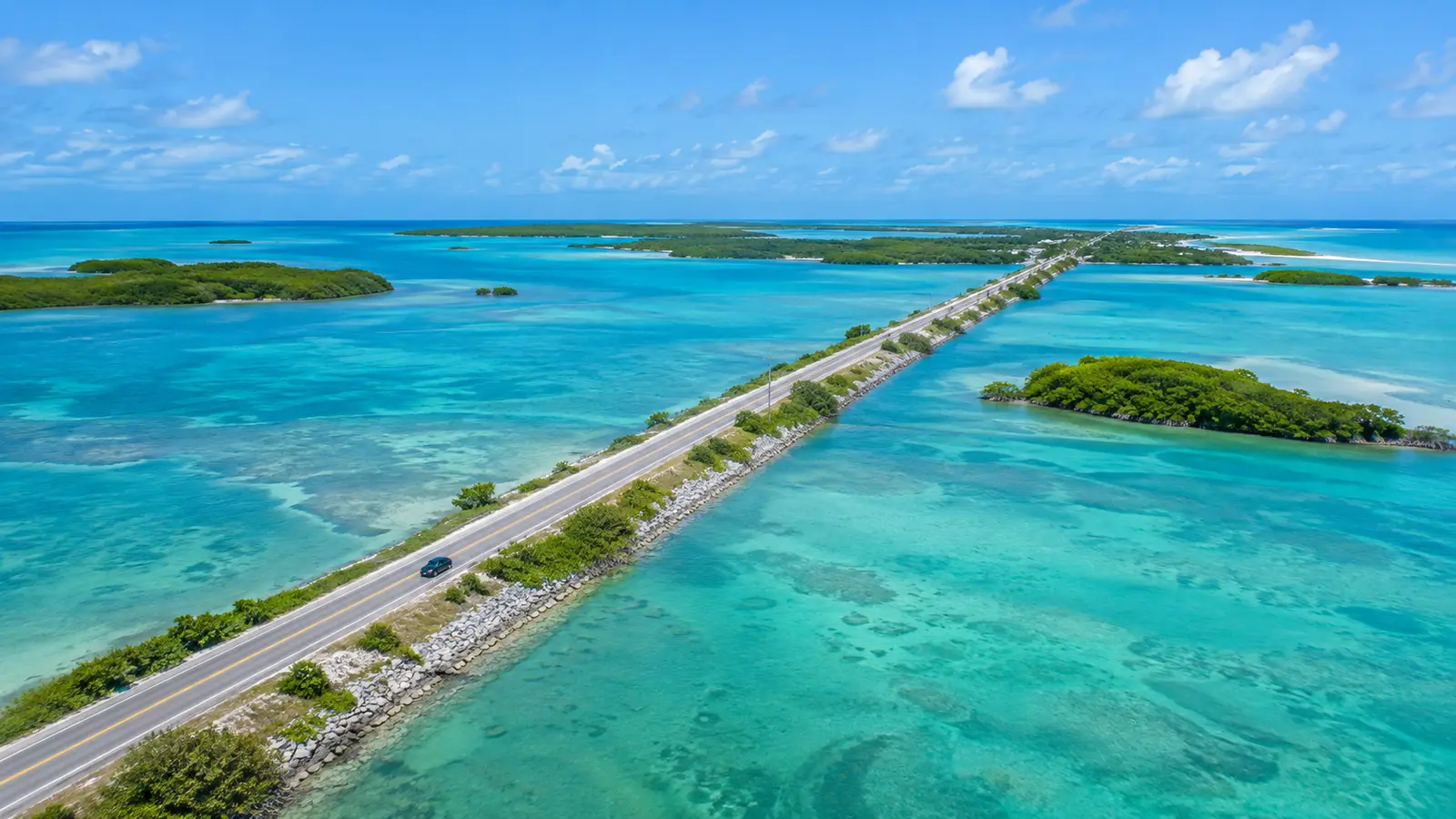
The capital isn't a beach destination in itself, but the sea is never far. You have two options, depending on time and budget, a day at the eastern beaches without changing hotels, or a few nights in the city followed by a stay in Varadero, linked by the Vía Blanca highway.
| Beach | Distance from downtown | Feel |
|---|---|---|
| Bacuranao | About 15 km east | Small, quiet cove popular with locals |
| Santa María del Mar | About 20 km east | The liveliest eastern beach, with bars and hotels |
| Tarará | About 20 km east | Calm water and a small reef |
| Boca Ciega and Guanabo | About 23 to 30 km east | Local feel, small private restaurants in Guanabo |
| Varadero | About 140 km east, two hours by road | More than 20 km of sand, one of the largest resort areas in the Caribbean |
Where to stay, hotel or casa particular
Casas particulares are rooms or apartments rented out by private owners, a practice allowed since 1997. Look for a small sign on the door with two blue triangles on a white background. Breakfast is often included in the price, but check ahead. The Government of Canada notes that theft from rooms is common, especially in casas particulares, so keep valuables on you or locked away.
The hotel scene has shifted a lot. Meliá, which once owned 34 five-star hotels in Cuba, mainly in Havana, Varadero and the keys, left the country entirely in July 2026, and Iberostar has also pulled out, under pressure from U.S. sanctions. A hotel may therefore have a new operator. Check who runs it when you book, and avoid unsecured Cuban booking sites, as Ottawa recommends.
How do you get around Havana?
José Martí Airport is about 20 km southwest of downtown. Taxi and luggage scams have been reported there, according to travel.gc.ca. Use only official taxis, don't hail them on the street and agree on the fare before getting in, since taxis have no meters.
The photogenic classic cars can come at exorbitant prices. Confirm the fare first, and know that old private cars used as taxis lack standard safety features and passenger insurance. As for public buses, Canada calls them unreliable and overcrowded, and fuel shortages make local transport scarce and expensive.
Old Havana itself is very walkable. On foot is often the easiest way to get from one plaza to the next.
Money, power and day-to-day safety
Since June 6, 2026, Visa and Mastercard cards are no longer accepted in Cuba. Bring enough cash for your whole stay. U.S. dollars and euros are more widely accepted than Canadian dollars, and small bills come in handy for taxis and tips. Exchange money at a bank, a major hotel or an official exchange office, since changing money on the street is illegal. Our money and cards guide has the full picture.
Power outages are daily, long and unpredictable, and communications often drop. Ottawa suggests installing a VPN before you leave and keeping a paper copy of your emergency contacts. Be wary of overly friendly strangers, and don't accept drinks from new acquaintances.
The Embassy of Canada is in Miramar (Calle 30, No. 518, corner of 7ma), reachable at +53 7 204 2516. Our safety guide covers other precautions.
Frequently asked questions
How far is Havana airport from downtown?
José Martí Airport (HAV) is about 20 km southwest of downtown. Use only official taxis and agree on the fare before leaving.
How long does it take to get from Havana to Varadero?
Allow about two hours by road for roughly 140 km east, along the Vía Blanca.
What is the closest beach to Havana?
The eastern beaches start about 15 km from downtown, with Bacuranao. Santa María del Mar, about 20 km out, is the liveliest.
Can I fly direct from Montreal to Havana?
Not as of November 2026. All Canadian airlines have suspended flights to Cuba until further notice, so you must go through a third country with an electronic visa obtained in advance.
Since when has Old Havana been a UNESCO site?
Since 1982. The listed site covers the old city and its fortification system, over 214 hectares.
Sources consulted
- Conseils aux voyageurs, Cuba, gouvernement du Canada (mis à jour le 5 octobre 2026)
- Vieille ville de La Havane et son système de fortifications, Centre du patrimoine mondial de l'UNESCO
- Old Havana, Wikipedia
- José Martí International Airport, Wikipedia
- Varadero, Wikipedia
- Best beaches near Havana, Cuba, Rough Guides
- Casa particular, Wikipedia
- Spanish hotel chain Meliá is leaving Cuba, AP via WLRN (22 juillet 2026)
- Cuba admits hotel closures, no direct flights from Canada, Deep Arrival (17 novembre 2026)
- Cuba rolls out new e-Visa portal, entry rules for Canadians, Open Jaw (13 novembre 2026)