Travel to Cuba as of November 2026
Before we get to the weather, a word on the bigger picture. Since its October 5, 2026 update, travel.gc.ca has advised Canadians to avoid non-essential travel to Cuba because of worsening shortages of fuel, electricity, food, water and medicine. The Government of Canada adds that these conditions could worsen during hurricane season.
All Canadian airlines have suspended service to Cuba until further notice. Air Transat announced an indefinite suspension on June 5, 2026, the same day as Sunwing Vacations and WestJet Vacations. International airlines still offer commercial flights, but availability may shrink on short notice. Our Cuba safety guide has the details. The rest of this page is here to help you plan once flights resume.
Official hurricane season dates
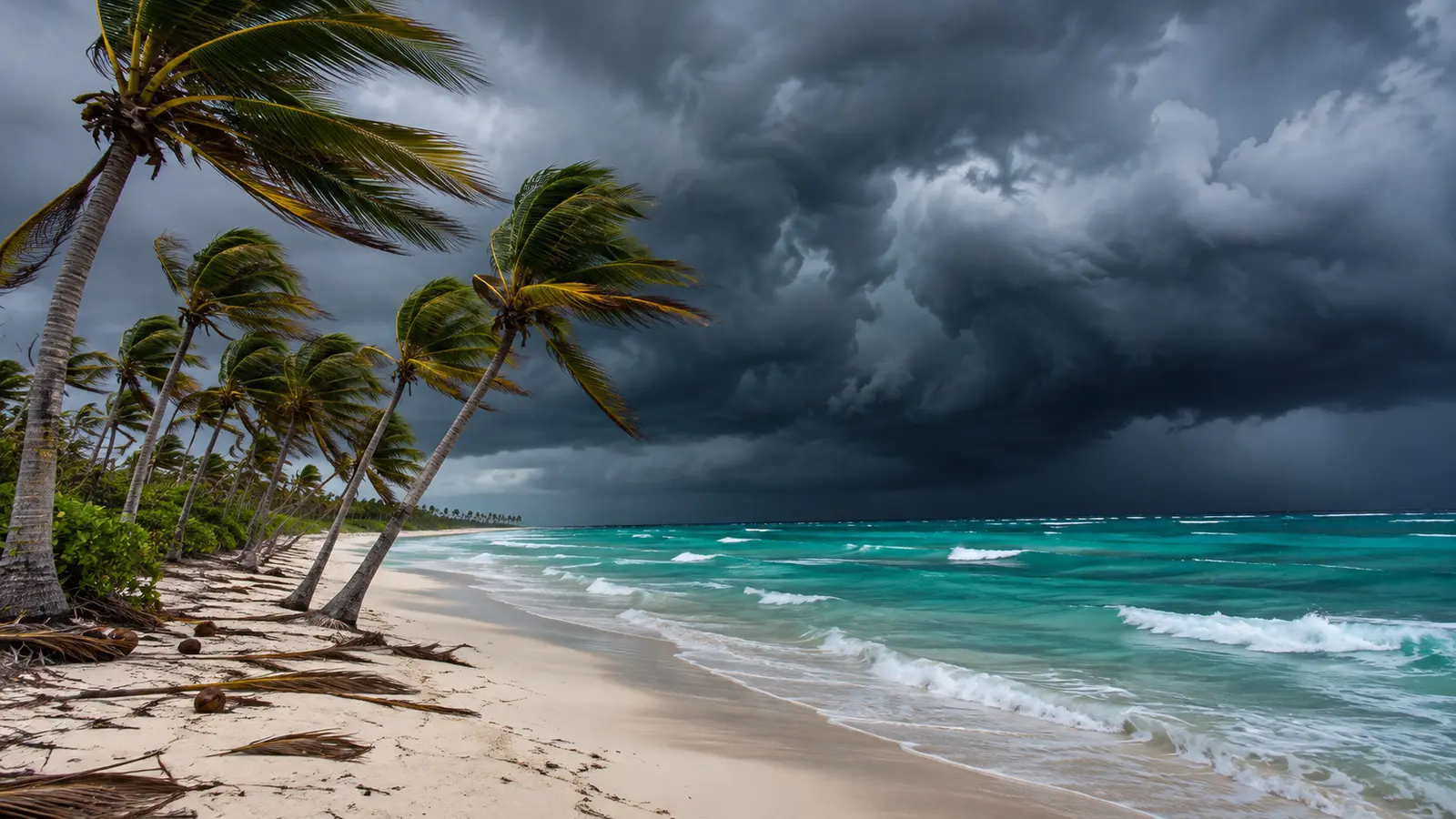
In the Atlantic basin, which includes the Caribbean Sea and the Gulf of Mexico, the season officially starts on June 1 and ends on November 30. Both the U.S. NOAA and Cuba's INSMET use these dates. Travel.gc.ca also describes a season from early June to the end of November, and warns that even a small tropical storm can quickly grow into a major hurricane.
According to INSMET, the most active stretch runs from mid-August to the end of October. NOAA puts the climatological peak on September 10. Around 75% of seasons since the start of the satellite era in 1966 have had at least one named storm active on that date. NOAA also notes a secondary peak around mid-October, mainly in the Caribbean Sea and the Gulf of Mexico, in other words around Cuba.
Why early and late season matter so much in Cuba
INSMET explains it this way. In June, October and November, storms usually form in the western Caribbean and the Gulf of Mexico, then move north. Cuba sits right in their path. In July, August and September, they tend to form out in the Atlantic, between Africa and the Lesser Antilles, and travel west on long tracks.
Recent hurricanes bear this out. Several hit the island in October or November, well after the September 10 peak.
| Hurricane | Date it reached Cuba | Area affected |
|---|---|---|
| Irma | September 9, 2017 | North coast, near Cayo Romano |
| Ian | September 27, 2022 | Pinar del Río province, in the west (Category 3) |
| Oscar | October 20, 2024 | Near Baracoa, Guantánamo province (Category 1) |
| Rafael | November 6, 2024 | Artemisa province, in the west (Category 3) |
| Melissa | October 29, 2025 | Near Chivirico, Santiago de Cuba province (Category 3) |
Hurricane risk in Cuba by month
No one can predict weeks ahead where a hurricane will strike, INSMET points out. All we can follow are average patterns. Here is what to expect depending on when you travel.
| Period | What to know |
|---|---|
| December to May | Outside hurricane season. From November to April, passing cold fronts can still bring sudden changes in the weather. |
| June | Start of the season. Storms often form in the western Caribbean, close to Cuba. May and June can also bring heavy rain. |
| July | Systems mostly form far out in the Atlantic and move west. |
| August | The most active part of the season starts around mid-August. |
| September | Climatological peak on September 10. Irma (2017) and Ian (2022) hit Cuba this month. |
| October | Secondary peak around mid-October in the Caribbean. Oscar (2024) and Melissa (2025) arrived in October. |
| November | The season lasts until the 30th. Rafael hit western Cuba on November 6, 2024. |
What Hurricane Melissa showed in 2025
On October 29, 2025, Melissa made landfall near Chivirico, in Santiago de Cuba province, as a Category 3 storm. Hurricane warnings covered Granma, Santiago de Cuba, Guantánamo, Holguín and Las Tunas. The Cuban government reported 735,000 people evacuated in the east of the country.
Santiago de Cuba's Antonio Maceo Airport was damaged and did not reopen to domestic flights until November 15. That's worth remembering if you're eyeing eastern Cuba, such as the Holguín area. A late-season storm can disrupt transportation long after it has passed.
Travel insurance and tour operator hurricane policies
Cuba requires proof of medical insurance on arrival, according to travel.gc.ca. Our passport and entry guide explains the rule. On the Canadian side, the government warns that your provincial health plan may not cover any medical costs abroad. Trip interruption insurance covers situations that force you to cancel part of your trip. Read your policy carefully, since it's up to you to know its terms.
Major tour operators also publish a hurricane policy. Transat's 2026 version shows how these work, even though Transat isn't serving Cuba right now. It covered departures from June 1 to November 30, 2026, and applied only if the U.S. National Hurricane Center had issued a hurricane advisory for the destination city, or if a Category 1 or stronger hurricane had passed through the hotel within a week of departure. Customers could then pick one of these options:
- travel later at no extra cost, no later than December 6, 2026;
- switch destinations, paying any difference in price;
- cancel for a travel credit valid for one year;
- travel anyway, with no refund if the trip is disrupted.
What to do if a hurricane threatens during your stay
In Cuba, INSMET issues tropical cyclone advisories. When a storm poses a threat to the island within the next 72 hours, they come out every six hours. Cuba also has a Civil Defence organization with set protection plans. On the ground, instructions from your hotel and local authorities come first.
Travel.gc.ca offers this advice to anyone staying in a coastal area during the season:
- be ready to change your plans at any time, including cutting your trip short or cancelling it;
- stay informed of the latest regional weather forecasts;
- carry the emergency contact details of your airline or tour operator;
- follow the instructions of local authorities.
Frequently asked questions
When is hurricane season in Cuba?
It officially runs from June 1 to November 30. The most active stretch is from mid-August to the end of October.
What is the riskiest month for hurricanes in Cuba?
The Atlantic peak falls around September 10. For Cuba, though, INSMET considers June, October and November especially dangerous, because storms then form in the western Caribbean, close to the island.
Is November safe from hurricanes in Cuba?
The risk drops late in the season, but it doesn't go away before November 30. Rafael hit western Cuba on November 6, 2024.
Does travel insurance cover a hurricane?
It depends on your policy. Trip interruption insurance may cover a shortened trip, but check the terms before you leave. Medical insurance is required to enter Cuba.
Can I fly from Quebec to Cuba right now?
Not with a Canadian airline. As of November 2026, all Canadian airlines have suspended service to Cuba until further notice, and Canada advises against non-essential travel. See our when to go page to plan ahead.
Sources consulted
- Conseils aux voyageurs, Cuba, gouvernement du Canada (mis à jour le 5 octobre 2026)
- La temporada ciclónica, generalidades, Instituto de Meteorología de Cuba (INSMET)
- Earth from Orbit: Atlantic Hurricane Season Hits Its Peak, NOAA NESDIS
- List of Cuba hurricanes, Wikipedia
- Hurricane Melissa, Wikipedia
- Assurance interruption de voyage et assurance maladie de voyage, gouvernement du Canada (modifié le 2 septembre 2026)
- Hurricane Policy 2026, Transat
- Update on our operations to/from Cuba, Air Transat (5 juin 2026)
- Sunwing Vacations, WestJet Vacations indefinitely suspend Cuban operations, CP24 (5 juin 2026)